Separate H₂ and O₂
The separator forms the boundary between the cathode and anode compartments, helping limit mixing of the gases produced.
PPS / ENGINEERED FOR ALKALINE ELECTROLYSIS
Woven separators designed for alkaline water electrolysis, with permanent hydrophilicity and a controlled porous structure.
01 / PPS
Placed between the cathode and anode, the hydrophilic PPS separator keeps the gas-producing compartments apart. Electrolyte wets its porous structure, providing a path for ionic conduction while the woven PPS provides mechanical support.
Structural modification supports wetting and electrolyte conduction.
PPS materials offer resistance to acids, alkalis, high temperatures and organic solvents.
Textile processing and surface control balance gas separation with ion transport.
02 / H₂ │ O₂
The separator forms the boundary between the cathode and anode compartments, helping limit mixing of the gases produced.
Hydrophilic modification helps the alkaline electrolyte wet the woven PPS and fill its porous structure.
The electrolyte within the pores carries ions between the compartments. The PPS framework provides mechanical support.
03 / PPS SEPARATOR SERIES
Compare thickness and mass per unit area as a starting point. Check the full specifications and your cell requirements before selecting a model.
Specifications reproduced from the company brochure. Final selection should follow the model-specific technical documents and agreed operating conditions.
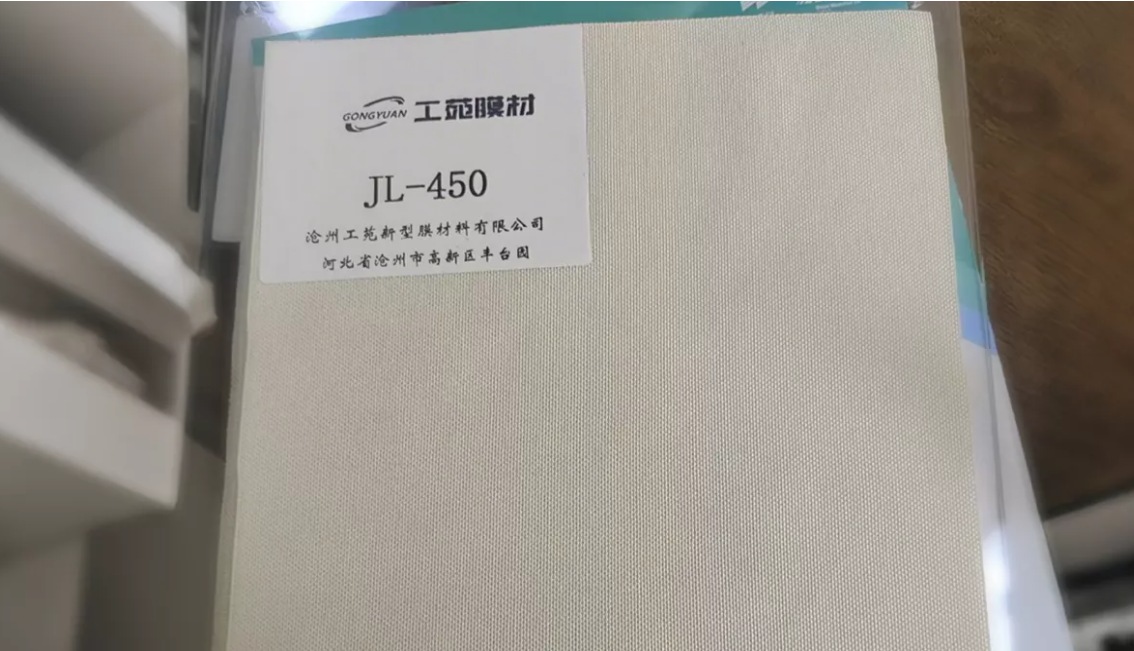
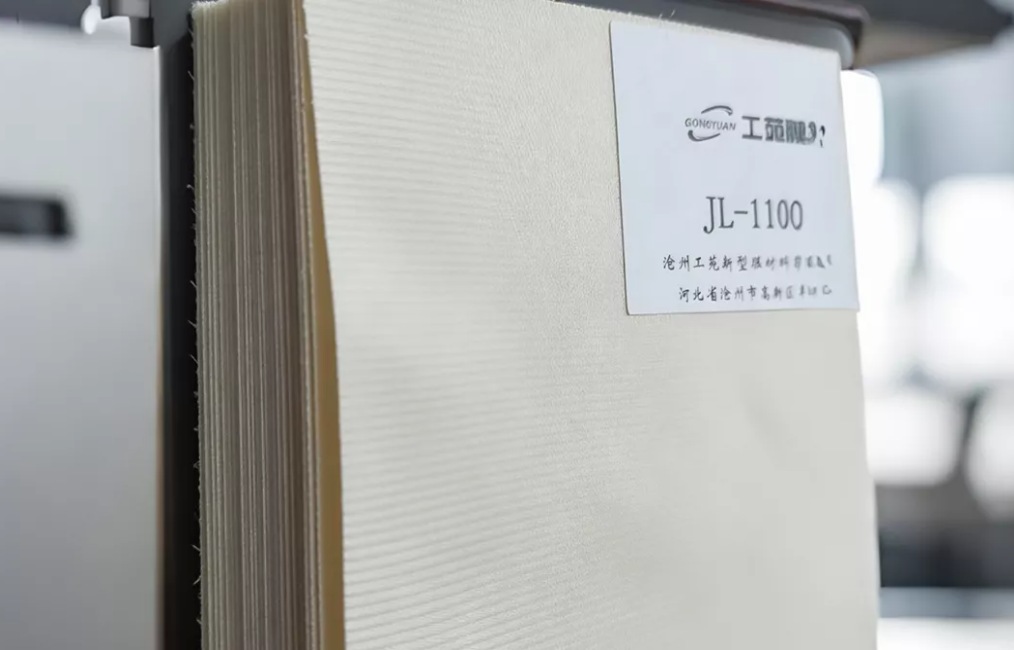
| Parameter | JL-450 | JL-730 | JL-1100 | Test standard |
|---|---|---|---|---|
| Mass per unit area g/m² | 480 ± 20 | 730 ± 20 | 1100 ± 100 | GB/T 4669-2008 |
| Thickness mm | 0.85 ± 0.10 | 1.1 ± 0.10 | 1.7 ± 0.10 | JIS 1096-2010 |
| Effective width mm | ≤ 2500 | ≤ 2500 | ≤ 2500 | GB/T 4666-2009 |
| Sheet length mm | ≤ 2500 | ≤ 2000 | ≤ 2000 | GB/T 4666-2009 |
| Warp tensile force N/5 cm | ≥ 1500 | ≥ 1800 | ≥ 2500 | GB/T 3923.1-2013 |
| Weft tensile force N/5 cm | ≥ 1500 | ≥ 1800 | ≥ 2500 | GB/T 3923.1-2013 |
| Warp elongation at break % | ≥ 30 | ≥ 30 | ≥ 30 | GB/T 3923.1-2013 |
| Weft elongation at break % | ≥ 20 | ≥ 20 | ≥ 20 | GB/T 3923.1-2013 |
| Gas tightness mmH₂O | ≥ 550 | ≥ 600 | ≥ 400 | JC/T 211-2009 |
| Water absorption time s | ≤ 10 | ≤ 10 | ≤ 10 | GB/T 21665.1-2008 |
| Area resistance at 60 °C Ω·cm² | ≤ 0.18 | ≤ 0.25 | ≤ 0.8 | SJ/T 10171.5-1997 |
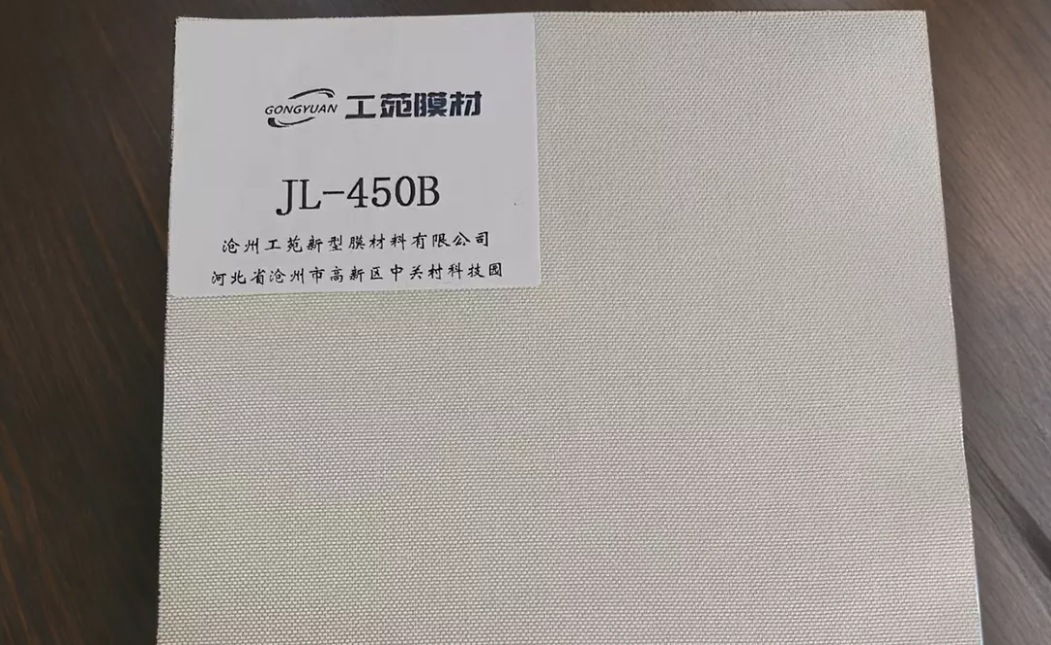
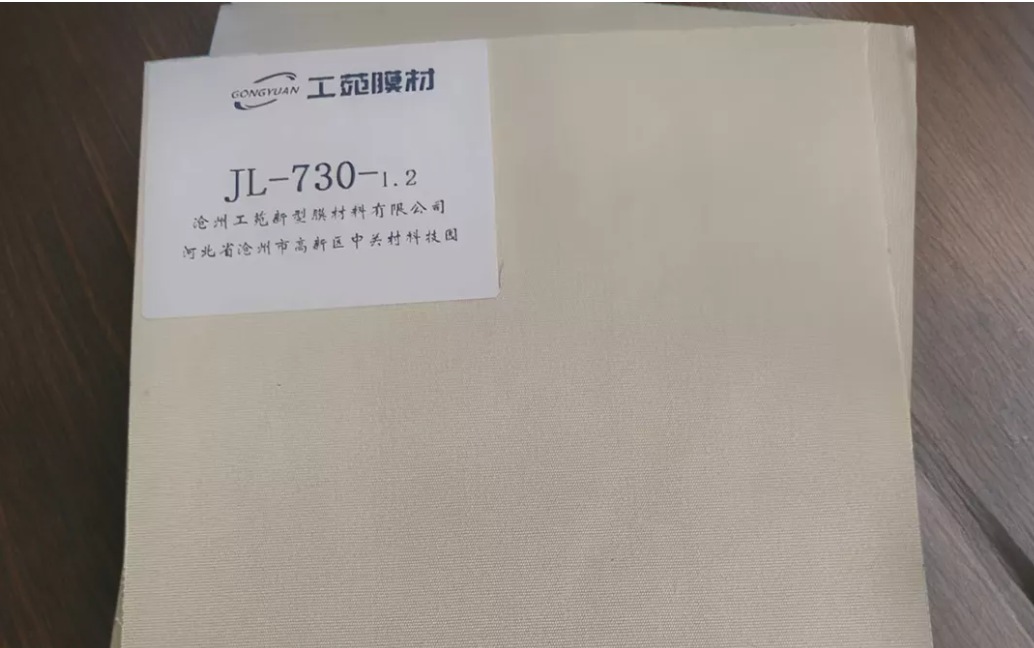
Sample photographs also show JL-450B and JL-730-1.2. Their specifications are available on request; they are not equated with the models in this table.
JL-450 · brochure test snapshot
Area resistance
Hydrogen purity
Area resistance tested at 60 °C in 30 wt% KOH. Hydrogen purity at ambient pressure. Brochure values describe stated test conditions, not a guarantee for every system.
PPS / APPLICATION
Share your operating temperature, KOH concentration, differential pressure, active area, sheet dimensions and required quantity. These details help us discuss model suitability and the technical documents you need.
Temperature, electrolyte composition and concentration, differential pressure and current density.
Active area, sheet dimensions, available thickness and assembly requirements.
Preferred model, sample or production quantity, delivery destination and timeline.
It is designed for alkaline water electrolysis, between the cathode and anode compartments, to help keep hydrogen and oxygen apart.
OH⁻ ions move through the liquid electrolyte held in the porous structure. Ionic conduction is provided by the electrolyte, rather than through the solid PPS polymer itself.
The available brochure does not specify a maximum continuous operating temperature. The 60 °C resistance test is a test condition, not a temperature limit. Request model-specific confirmation for your application.
Compare thickness, mass per unit area, mechanical properties and area resistance, then review your operating conditions and cell dimensions with our team. The model number alone does not establish suitability.
JINLUN / GONGYUAN
Tell us about your electrolyzer, operating conditions and material requirements.